Register now for CSICon Las Vegas, October 27-30, 2016.
Registration ClosedNo, you’re not just seeing things!
For too long, skeptics have been wandering in the desert, parched and aimless, wondering when, oh when, will they find an oasis?
But just on the horizon, hope beckons. At last! A chance for critical thinkers from around the world to celebrate with the brightest minds and biggest personalities in science and skepticism.
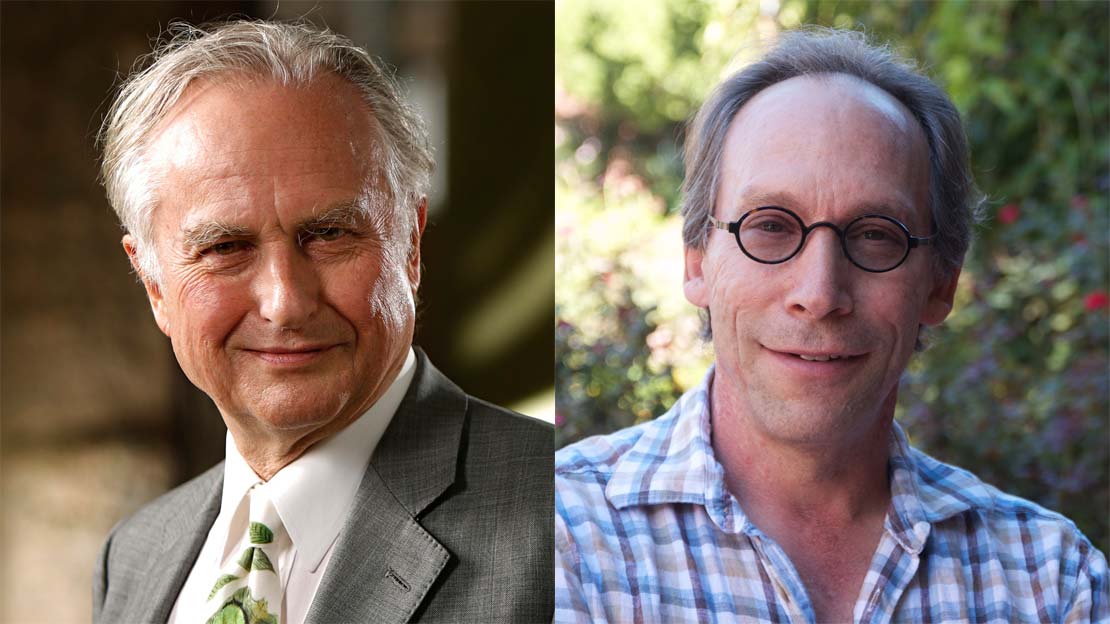
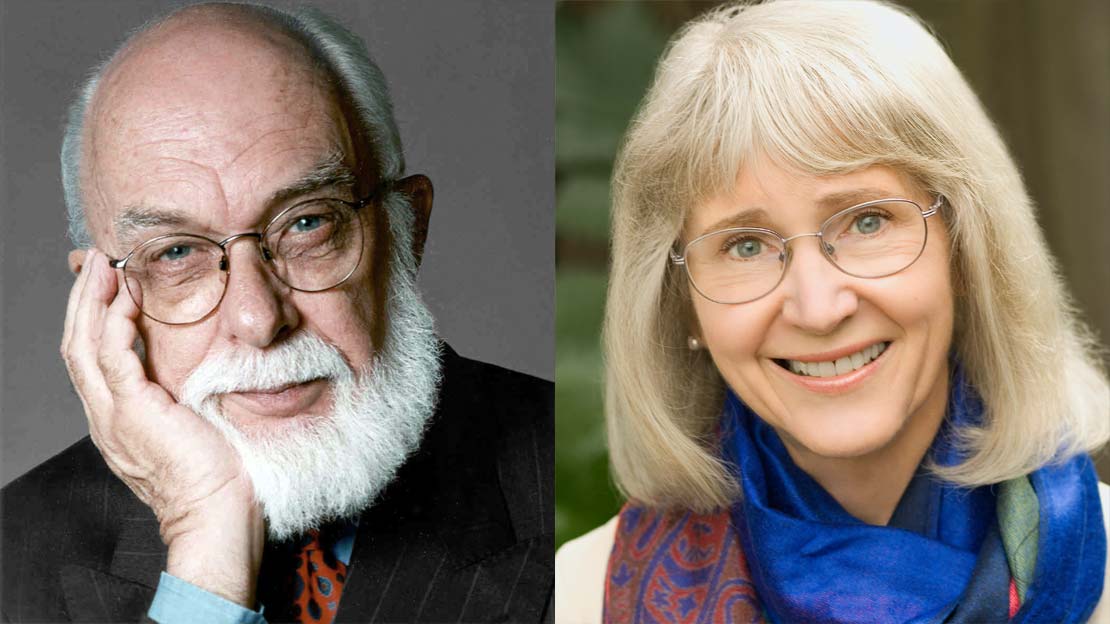
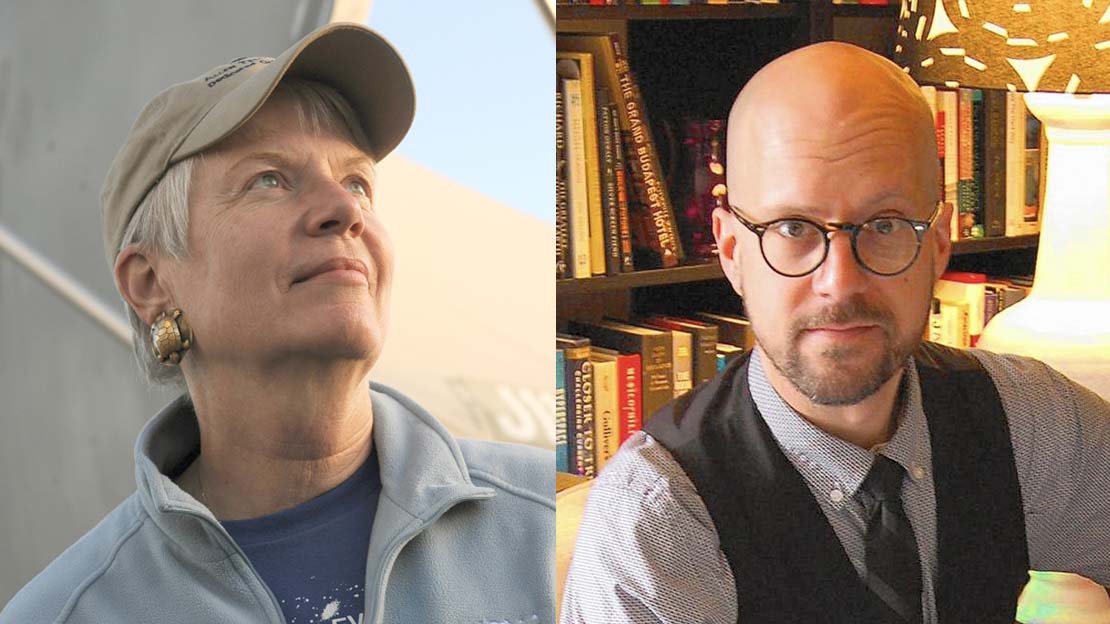
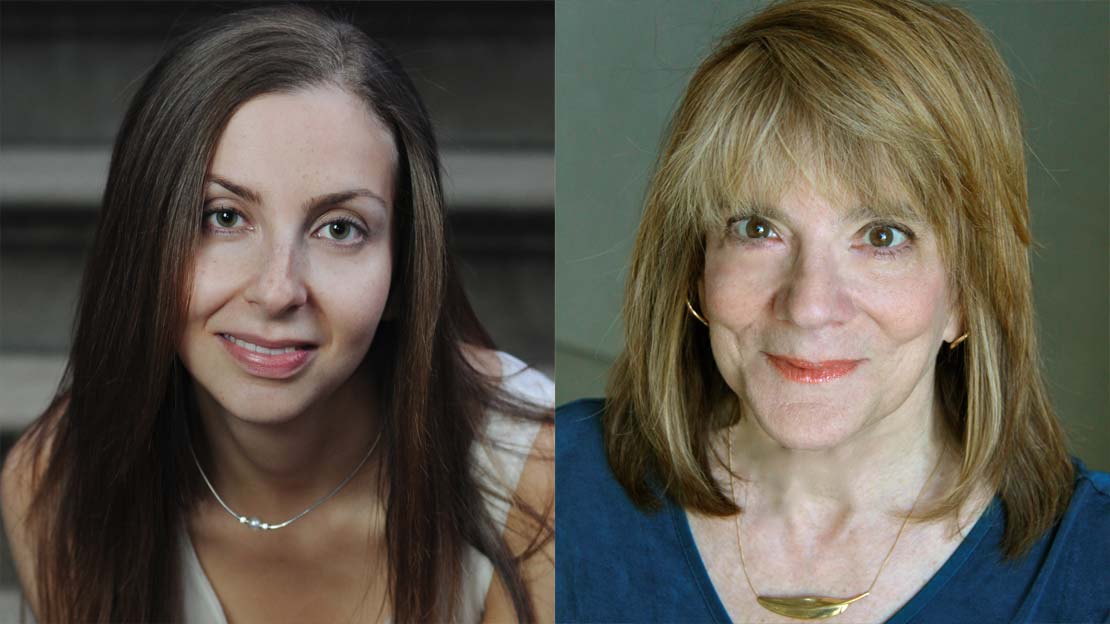
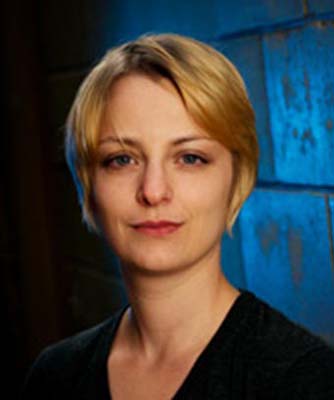
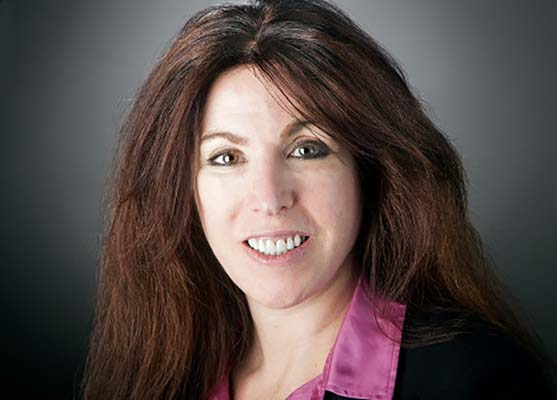
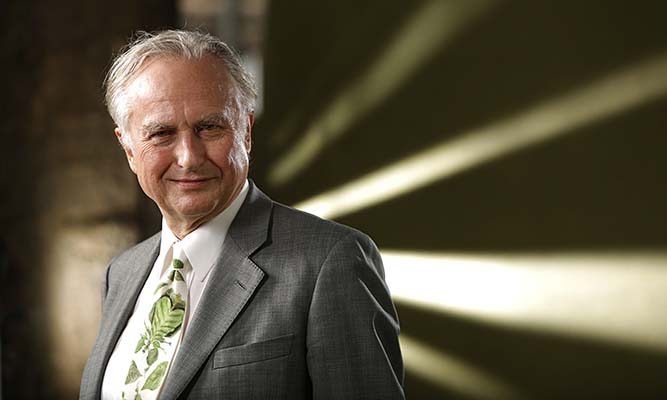
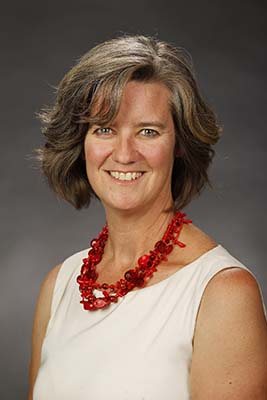
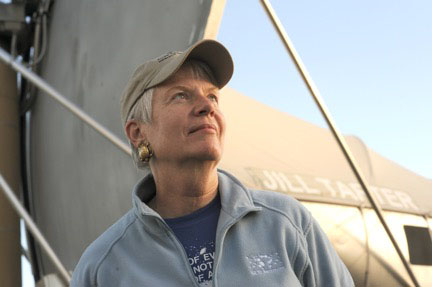
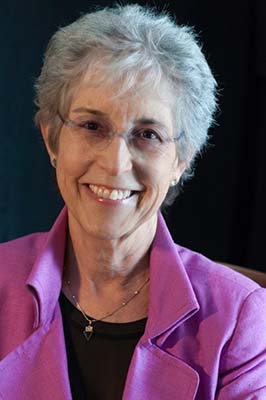
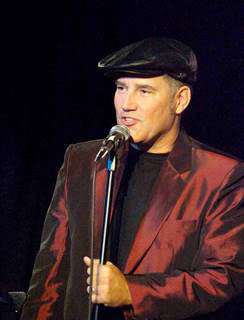
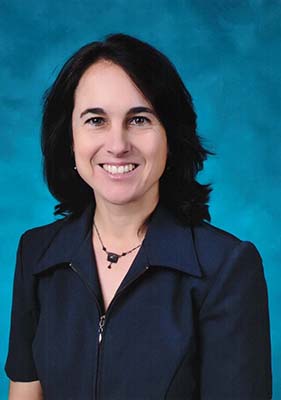
October 27-30, come to the Excalibur Hotel and Casino in Las Vegas, where brilliant speakers will make the City of Light truly shine, with skeptic stars like evolutionary biologist Richard Dawkins, science education champion Eugenie Scott, SETI astronomer Jill Tarter, and many more to be announced.
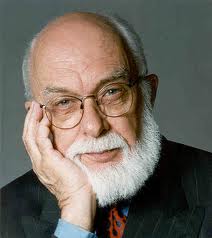
And yes, the amazing James Randi will be there, too.
CSICon 2016 is a production of the Committee for Skeptical Inquiry, the people who bring you Skeptical Inquirer magazine, the group that began organized skepticism a generation ago. And what better location for a conference of skeptics than in a city full of illusions?
Don’t wait! Unlike the claims of celebrity psychics, conspiracy theorists, and alt-med hucksters, this is no illusion. CSICon is real! Register now!
Join us for Skeptioke and the Song Parody Contest during the CSICon Halloween Party! Write your own skeptical or science-based lyrics to a karaoke song and vie for a $100 prize.
Fifteen Minutes of Skepticism: The Sunday Papers, An Interview
with Jay Diamond ›
By Susan Gerbic
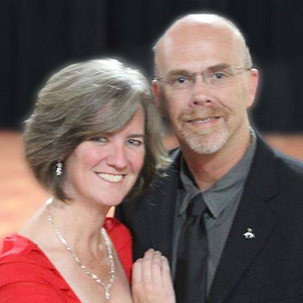
From TAM to CSICon: An Interview with Ray Hall and Katie
Dyer ›
By Susan Gerbic
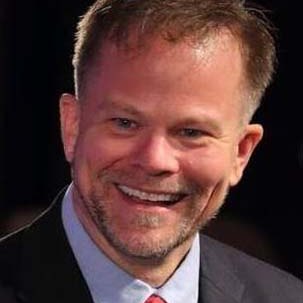
The Challenges of Science Communication: An Interview with
Kevin Folta ›
By Susan Gerbic
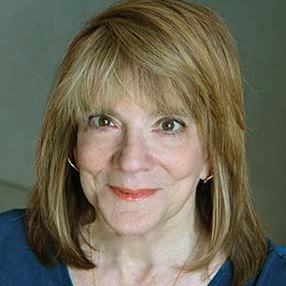
“That Doesn’t Mean It Really Happened”: An
Interview with Elizabeth Loftus ›
By Carrie Poppy
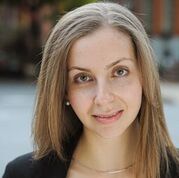
Skeptics Can Be Conned Too: An Interview with Maria
Konnikova ›
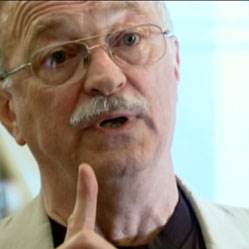
By Carrie Poppy
A ‘Nickell’ for Your Thoughts: A Conversation
with Joe Nickell ›

By Timothy Binga
Life as We Know It: An Interview with Jill Tarter ›
By Leonard Tramiel
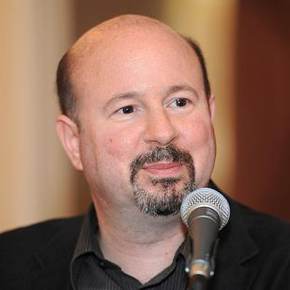
Michael Mann and the Climate Wars ›
By Mark Boslough
Keeping Up with Paul Offit ›
by Susan Gerbic
Armed with a Misinformation Radar: Interview with Kavin
Senapathy ›
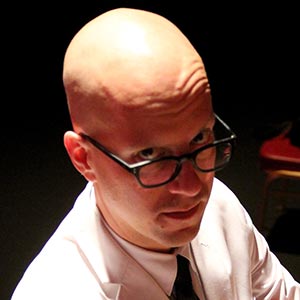
by Paul Fidalgo
A Conversation with George Hrab ›
by Susan Gerbic
A Conversation with the SkepDoc ›
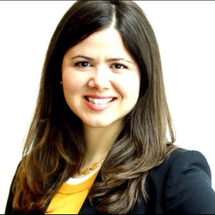
by Susan Gerbic
Click on speakers’ names to find out more about them.
Dr. James Alcock is Professor of Psychology at York University in Toronto, Canada. He is a Fellow and Member of the Executive Council of the Committee for Skeptical Inquiry and a member of the Editorial Board of The Skeptical Inquirer, In May 2004, CSICOP awarded him its In Praise of Reason Award. In the area of parapsychology and critical thinking, he has authored seven book chapters, and numerous articles, co-edited Psi wars, and published two books, Parapsychology: Science or Magic? and Science and Supernature. He has also co-authored two social psychology textbooks and is currently completing a book manuscript on the psychology of belief. He is an amateur magician and is a member of the International Brotherhood of Magicians.
Banachek's specialty is what makes him different than the ordinary magician. They do magic with lions, tigers and beautiful women, Banachek performs magic with information and the human mind. Unarguably Banachek maps the best and the worst of the human brain and all of it's mysterious uncharted territories in between.
Many see Banachek as a human profiler but he is so much more than that. Banachek is so skillful in his observation of the natural world and his examination of psychological influence that many believe him to be psychic. He takes his five known senses to create the illusion of a sixth.
Julia Belluz is a National Magazine Award-winning journalist covering medicine and public health for Vox.com. She was a 2013-14 Knight Science Journalism Fellow at MIT. Julia’s writing has appeared in Maclean’s, the British Medical Journal, the Medical Post, the Globe and Mail, the National Post, Slate, the Times (of London), the Economist, and other publications. She founded the blog/column ‘Science-ish’ to examine the evidence behind popular health claims—and won a Gold National Magazine Award and a Canadian Medical Association Award. Outside of reporting, Julia speaks regularly at health care and journalism conferences the world over. She is a fellow and guest lecturer at McMaster University and is co-writing a book about the misuses and abuses of science in policy, clinical practice and journalism. She holds an MSc. from the London School of Economics and a B.A. from Ryerson University’s School of Journalism.
Lindsay Beyerstein is an investigative journalist in Brooklyn, New York. Her reporting has appeared in Slate, The Columbia Journalism Review, Newsweek, Al Jazeera America, The New Republic,and other publications. Her photography has appeared in The Wall Street Journal,the New York Times' City Blog, and other outlets. She is the co-host of Point of Inquiry, a radio show and podcast produced by the Center for Inquiry. She is the lead writer at the Sidney Hillman Foundation, a non-profit dedicated to honoring excellence in socially conscious journalism.
Robyn Blumner joined the Richard Dawkins Foundation for Reason & Science as Executive Director in February 2014 and a year later she was promoted to President & chief executive officer. In January 2016 she became CEO of the Center for Inquiry. She comes off a 16-year career as a nationally syndicated columnist and editorial writer at the Tampa Bay Times newspaper (formerly the St. Petersburg Times.) Blumner is an expert on civil liberties and civil rights. She has written extensively on church-state separation, free speech and privacy issues as well as economics and the diminishing power of the middle-class. Her columns appeared regularly in newspapers around the country. In 2012, she was a finalist for a Pulitzer Prize for editorial writing along with three colleagues. Blumner was executive director of the American Civil Liberties Union of Florida from 1989 to 1997, and executive director of the ACLU of Utah from 1987 to 1989. In that role she led efforts to protect abortion rights, student free speech rights and to prevent the adoption of school vouchers, among dozens of public policy battles.
Blumner attended Cornell University, School of Industrial and Labor Relations, graduating with honors in 1982. Her law degree comes from New York University School of Law where she graduated in 1985 and is a member of the New York State Bar.
One of the most respected scientists in the world and the biggest draw in secularism, Richard Dawkins always generates impressive crowds when visiting North America. Secularism is sweeping America as a movement, and Richard Dawkins is the catalyst who galvanizes it.
From 1995 to 2008 Richard Dawkins was the Charles Simonyi Professor of the Public Understanding of Science at Oxford University. He is an internationally best-selling author. Among his books are The Ancestor’s Tale, The Selfish Gene, The Blind Watchmaker, Climbing Mount Improbable, Unweaving the Rainbow, A Devil’s Chaplain, The God Delusion, The Greatest Show on Earth, The Magic of Reality, and An Appetite for Wonder. His most recent book is the second part of his autobiography, A Brief Candle in the Dark. He is a Fellow of the Royal Society and of the Royal Society of Literature. His around-the-world speaking tour is the focus of a recent documentary The Unbelievers which also features appearances by Woody Allen, Stephen Colbert, Cameron Diaz, Ian McEwan, Ricky Gervais, Stephen Hawking, Eddie Izzard, Bill Pullman, and Sarah Silverman.
Katie Dyer earned a PhD in Human Development and Family Studies from the University of Missouri-Columbia in 2000. She worked teaching evidence-based medicine in a medical residency program for four years before assuming a faculty position at the California State University, Fresno, where she is currently associate professor and department chair. Dr. Dyer primarily studies parenting practices pertaining to children's sleep, as well as parent education. She has a secondary research interest in the development of curiosity and critical thinking in college students.
Mark Edward is a professional mentalist who specializes in magic of the mind. His book "Psychic Blues" cracked open the crystal ball on the psychic business and has been described by Mark Oppenheimer at The New York Times Review of Books: "Mr. Edward is staking his claim to belong to a very special subcategory of magicians and mediums: those who both perform their crafts and debunk them. From Harry Houdini to James (the Amazing) Randi and the duo of Penn and Teller, there is a long tradition of magicians who believe that it is their duty to inculcate skepticism in the audience." Mark is recognized for his television work as both primary consultant and on-air performer most recently in episodes of "Weird or What?," "Brain Games," "Nancy Grace." "ITV This Morning" and "Inside Edition." In addition to working with Inside Edition's Lisa Guerrero in 2012 to expose "Long Island Medium" Theresa Caputo, he recently completed another "Inside Edition" assigment with Guerrero on how psychics can easily convince us they are "reading minds" and be so accurate airing in April, 2016.
Kevin M. Folta is a Professor and the Chairman of the Horticultural Sciences Department at the University of Florida. His laboratory examines how plants sense light signals and how different parts of the light spectrum can affect shelf life and high-value fruit and vegetable traits. His group also uses novel genomics approaches to identify genes related to flavor and disease resistance. A central part of his program is communicating science to non-scientific audiences, and training scientists, farmers, physicians and students how to perform public outreach in scientific or controversial topics. BS/MS Northern Illinois University 1989/1992, Ph.D. University of Illinois at Chicago, 1998.
Kendrick Frazier is Editor of Skeptical Inquirer and a fellow and member of the Executive Council of the Committee for Skeptical Inquiry. He is also on the board of the Center for Inquiry. He is a fellow of the American Association for the Advancement of Science and is author or editor of ten books, including Science Under Siege and five other SI anthologies. He was formerly Editor of Science News.
Affectionately called the Wikipediatrician, Susan Gerbic is the cofounder of Monterey County Skeptics and a self-proclaimed skeptical junkie. Susan is also founder of the Guerrilla Skepticism on Wikipedia (GSoW) project. You can contact her at SusanGerbic.com.
Stephanie Guttormson joined the Richard Dawkins Foundation for Reason and Science in March of 2013.
She was the leader of an award winning student group at the Metropolitan State University of Denver that developed widely successful unique events such Food for Freethought and The Pseudoscience Fair.
She holds two Bachelor of Arts degrees in Linguistics and Theoretical Mathematics from the Metropolitan State University of Denver.
She is the creator of ThinkStephtically, a YouTube channel focused on promoting critical thinking, without mercy. She covers topics ranging from faith healing to organic food.
She appears monthly on the Dogma Debate radio show and the Road to Reason TV show. She also gives talks around the country educating folks about transgender people.
Harriet Hall, MD, is a retired family physician and Air Force flight surgeon who writes about medicine, quackery, alternative medicine, critical thinking, and science. She is one of the editors of the Science-Based Medicine blog and a contributing editor to Skeptical Inquirer and to Skeptic Magazine where she writes the SkepDoc column. She is co-author of the textbook Consumer Health: A Guide To Intelligent Decisions and author of the autobiographical Women Aren’t Supposed to Fly. Her series of 10 free video lectures on science-based medicine vs. alternative medicine can be found on YouTube. Her website is www.skepdoc.info.
Dr. Raymond Edward Hall is a Professor in the Department of Physics at California State University, Fresno, where for more than 15 years he has developed and taught courses in engineering physics, quantum mechanics, particle physics, critical thinking, and the philosophy of science. He holds a PhD in Experimental High Energy Particle Physics from the University of California, Riverside, and he has 16 years experience as a researcher with the D-Zero Collaboration. During his participation in the construction and operation of the D-Zero Detector at the Fermi National Accelerator Laboratory in Batavia, Illinois, he was part of the research team that discovered the fundamental particle known as the top quark.
David J. Helfand, a CSI Fellow, has been a faculty member at Columbia University for thirty-nine years, serving half of that time as Chair of the Department of Astronomy. He is the author of nearly 200 scientific publications and has mentored 22 PhD students, but most of his pedagogical efforts have been aimed at teaching science to non-science majors. He instituted the first change in Columbia's Core Curriculum in 50 years by introducing science to all first-year students. In 2005, he joined an effort to create Canada's first independent, non-profit, secular university, Quest University Canada. He was a Visiting Tutor in the University's inaugural semester (Fall 2007) and served as President & Vice-Chancellor from 2008-2015. He is also recent completed a four-year term as President of the American Astronomical Society. His first book, A Survival Guide to the Misinformation Age appeared earlier this year. He is a Fellow of CSI.
Multi-instrumentalist, singer, songwriter, producer, composer, and heliocentrist George Hrab has written and produced six independent CDs and a concert DVD; published two books; recorded hundreds of episodes of an award-winning podcast; and has even performed for President Clinton. He's traveled to four continents promoting critical thinking, science, and skepticism through story and song. George is considered one of the preeminent skeptic/science/atheist/geek-culture music icons currently living in his apartment.
Professor emeritus of psychology, University of Oregon; CSI fellow and a noted critic of parapsychology. Ray is one of the founders of the Committee for the Scientific Investigation of Claims of the Paranormal (CSICOP) – now CSI. He is also the creator of the Skeptic’s Toolbox.
Maria Konnikova is the New York Times-bestselling author of The Confidence Game (Viking/Penguin, 2016) and Mastermind: How to Think Like Sherlock Holmes (Viking/Penguin, 2013). Her first book, Mastermind, has been translated into eighteen languages. It was nominated for the Agatha Award and the Anthony Award for Best Non-fiction and was a Goodreads People’s Choice Semifinalist for 2013.
Maria is a contributing writer for The New Yorker, where she writes a regular column with a focus on psychology and culture, and her writing has appeared in The Atlantic Monthly, The New York Times, California Sunday, Pacific Standard, The New Republic, WIRED, Scientific American, and The Smithsonian, among numerous other publications. Maria is a contributing editor for The New Republic, a recipient of the 2015 Harvard Medical School Media Fellowship, and a Schachter Writing Fellow at Columbia University’s Motivation Science Center. She hosts the weekly “Is that BS?” segment for Slate’s popular podcast, “The Gist,” and has been a frequent guest on national television and radio, including Real Time with Bill Maher, Charlie Rose, Morning Edition, Marketplace, and Brian Lehrer. She formerly wrote the “Literally Psyched” column for Scientific American and the popular psychology blog “Artful Choice” for Big Think. She graduated magna cum laude from Harvard University, where she studied psychology, creative writing, and government, and received her Ph.D. in Psychology from Columbia University.
Lawrence Krauss is director of the Origins Project at ASU and Foundation Professor in the School of Earth and Space Exploration and the Physics Department at Arizona State University. He has won numerous international awards for both his research and his efforts to improve the public understanding of science, he is the only physicist to have received the top awards from all 3 US Physics Societies, and is also the author of 9 books including bestsellers The Physics of Star Trek and A Universe from Nothing. He is a commentator and essayist for newspapers and appears regularly on radio and television and has recently delved into the film world as executive producer and subject of The Unbelievers, a documentary film that discusses science and reason. He also is chair of the Board of Sponsors of the Bulletin of the Atomic Scientists and on the board of the Federation of American Scientists. His new book The Greatest Story Ever Told …So Far will be released in the spring of 2017.
Ronald A. Lindsay, JD, PhD, is an author and the former president and CEO of the Center for Inquiry. He co-wrote the comments that CFI/CSI submitted to the FDA and FTC regarding the regulation of homeopathic products. His latest book is The Necessity of Secularism (Pitchstone 2014).
Elizabeth Loftus is Distinguished Professor at the University of California - Irvine. She holds faculty positions in the Department of Psychology & Social Behavior; the Department of Criminology, Law & Society, and the School of Law. She received her Ph.D. in Psychology from Stanford University. Since then, she has published 22 books and over 500 scientific articles. Loftus's research has focused on the malleability of human memory. She has been recognized for her research with seven honorary doctorates and election to numerous prestigious societies, including the National Academy of Sciences. She is past president of the Association for Psychological Science, the Western Psychological Association, and the American Psychology-Law Society.
Loftus’s memory research has led to her being called as an expert witness or consultant in hundreds of cases. Some of the more well known cases include the McMartin PreSchool Molestation case, the Hillside Strangler, the Abscam cases, the trial of Oliver North, the trial of the officers accused in the Rodney King beating, the Menendez brothers, the Bosnian War trials in the Hague, the Oklahoma Bombing case, and litigation involving Michael Jackson, Martha Stewart, Scooter Libby, and the Duke University Lacrosse players.
Dr. Michael E. Mann is Distinguished Professor of Atmospheric Science at Penn State University, with joint appointments in the Department of Geosciences and the Earth and Environmental Systems Institute (EESI). He is also director of the Penn State Earth System Science Center (ESSC).
Dr. Mann received his undergraduate degrees in Physics and Applied Math from the University of California at Berkeley, an M.S. degree in Physics from Yale University, and a Ph.D. in Geology & Geophysics from Yale University. His research involves the use of theoretical models and observational data to better understand Earth's climate system.
Dr. Mann was a Lead Author on the Observed Climate Variability and Change chapter of the Intergovernmental Panel on Climate Change (IPCC) Third Scientific Assessment Report in 2001 and was organizing committee chair for the National Academy of Sciences Frontiers of Science in 2003. He has received a number of honors and awards including NOAA's outstanding publication award in 2002 and selection by Scientific American as one of the fifty leading visionaries in science and technology in 2002. He contributed, with other IPCC authors, to the award of the 2007 Nobel Peace Prize. He was awarded the Hans Oeschger Medal of the European Geosciences Union in 2012 and was awarded the National Conservation Achievement Award for science by the National Wildlife Federation in 2013. He made Bloomberg News' list of fifty most influential people in 2013. In 2014, he was named Highly Cited Researcher by the Institute for Scientific Information (ISI) and received the Friend of the Planet Award from the National Center for Science Education. He is a Fellow of the American Geophysical Union, the American Meteorological Society, and the American Association for the Advancement of Science.
Dr. Mann is author of more than 190 peer-reviewed and edited publications, and has published two books including Dire Predictions: Understanding Climate Change and The Hockey Stick and the Climate Wars: Dispatches from the Front Lines. He is also a co-founder of the award-winning science website RealClimate.org.
Joe Nickell, is Senior Research Fellow of the Committee for Skeptical Inquiry (CSI). He is the author of more than twenty investigative books, including Detecting Forgery, Camera Clues, Unsolved History, Real-Life X-Files, Crime Science, The Kentucky Mint Julep, More Real-Life X-Files, and Secrets of the Sideshows.
Paul A. Offit, MD is the Director of the Vaccine Education Center at the Children’s Hospital of Philadelphia as well as the Maurice R. Hilleman Professor of Vaccinology and a Professor of Pediatrics at the Perelman School of Medicine at the University of Pennsylvania. He is a recipient of many awards including the J. Edmund Bradley Prize for Excellence in Pediatrics from the University of Maryland Medical School, the Young Investigator Award in Vaccine Development from the Infectious Disease Society of America, and a Research Career Development Award from the National Institutes of Health.
Dr. Offit has published more than 160 papers in medical and scientific journals in the areas of rotavirus-specific immune responses and vaccine safety. He is also the co-inventor of the rotavirus vaccine, RotaTeq, recommended for universal use in infants by the CDC; for this achievement Dr. Offit received the Luigi Mastroianni and William Osler Awards from the University of Pennsylvania School of Medicine, the Charles Mérieux Award from the National Foundation for Infectious Diseases; and was honored by Bill and Melinda Gates during the launch of their Foundation’s Living Proof Project for global health. In 2009, Dr. Offit received the President’s Certificate for Outstanding Service from the American Academy of Pediatrics. In 2011, Dr. Offit received the Humanitarian of the Year Award from the Biologics Industry Organization (BIO), the David E. Rogers Award from the American Association of Medical Colleges, the Odyssey Award from the Center for Medicine in the Public Interest, and was elected to the Institute of Medicine of the National Academy of Sciences. In 2012, Dr. Offit received the Distinguished Medical Achievement Award from the College of Physicians of Philadelphia and the Drexel Medicine Prize in Translational Medicine fro the Drexel University College of Medicine. In 2013, Dr. Offit received the Maxwell Finland award for Outstanding Scientific Achievement from the National Foundation for Infectious Diseases, the Distinguished Alumnus award from the University of Maryland School of Medicine, and the Innovators in Health Award from the Group Health Foundation. In 2015, Dr. Offit won the Lindback Award for Distinguished Teaching from the University of Pennsylvania and was elected to the American Academy of Arts and Sciences. In 2016, Dr. Offit won the Franklin Founder Award from the city of Philadelphia. Dr. Offit was a member of the Advisory Committee on Immunization Practices to the Centers for Disease Control and Prevention and is a founding advisory board member of the Autism Science Foundation and the Foundation for Vaccine Research.
He is also the author of six medical narratives: The Cutter Incident: How America’s First Polio Vaccine Led to Today’s Growing Vaccine Crisis (Yale University Press, 2005), Vaccinated: One Man’s Quest to Defeat the World’s Deadliest Diseases (HarperCollins, 2007), for which he won an award from the American Medical Writers Association, Autism’s False Prophets: Bad Science, Risky Medicine, and the Search for a Cure (Columbia University Press, 2008), Deadly Choices: How the Anti-Vaccine Movement Threatens Us All (Basic Books, 2011), which was selected by Kirkus Reviews and Booklist as one of the best non-fiction books of the year, Do You Believe in Magic?: The Sense and Nonsense of Alternative Medicine (HarperCollins, 2013), which won the Robert P. Balles Prize in Critical Thinking from the Center for Skeptical Inquiry and was selected by National Public Radio as one of the best books of 2013, and Bad Faith: When Religious Belief Undermines Modern Medicine (Basic Books, 2015), selected by the New York Times Book Review as an “Editor’s Choice” book in April 2015.
Massimo Polidoro is a writer and an internationally-recognized “mystery detective”. He began his career as James Randi’s apprentice and is the co-founder and head of the Italian skeptics group CICAP. He graduated in Psychology at the University of Padua and is the first professor of Anomalistic Psychology in Italy, at the University of Milan. As a journalist he writes for many science magazines and is the author of over forty books. He is a TV personality in Italy, a Research Fellow for CSI, and a longtime columnist for its magazine, the Skeptical Inquirer. He is currently working on The “Amazing” Randi biography.
Websites: www.massimopolidoro.com - https://theamazingrandistory.com
Anthony Pratkanis is an experimental social psychologist who studies persuasion and social influence. His research program has investigated such topics as the delayed effects of persuasion, attitudes and memory, groupthink, subliminal persuasion, mass communications, source credibility, persuasion and democracy, economic fraud crimes, and a variety of influence tactics such as the pique technique, phantoms, the projection tactic, the 1-in-5 prize tactic, and altercasting. He is the co-author (with Elliot Aronson) of Age of Propaganda: The Everyday Use and Abuse of Persuasion and (with Doug Shadel) of Weapons of Fraud: A Source Book for Fraud Fighters. Dr. Pratkanis is often called to serve as an expert witness on social influence in court cases, including such high profile trials as the Judas Priest, Publishers Clearing House, and RJR’s Eclipse Tobacco trials. He has also served as a consultant on influence and preventing fraud to such organizations as FINRA, AARP, SEC, and the United States Senate as well as appearing frequently in the mass media including the Oprah Winfrey Show and Dateline NBC. He is a fellow of the Committee for Skeptical Inquiry and an Inner Circle Magic Garage Magician, a Magician Extraordinaire of Ring 216 as well as a member of the International Brotherhood of Magicians and of the Society of American Magicians.
James Randi, began his career as a stage magician and escape artist. However, he achieved fame as a professional skeptic, publicly disproving the claims of self-described psychics, mentalists and faith healers, most notably the paranormalist Uri Geller and the TV evangelist Peter Popoff. He has also written numerous books about supernatural frauds. He is one of the founders of The Committee for the Scientific Investigation of Claims of the Paranormal (CSICOP), - now CSI - and The James Randi Educational Foundation (JREF).
Joe Schwarcz is Director of McGill University’s “Office for Science and Society” which is dedicated to demystifying science and separating sense from nonsense. He is well known for his informative and entertaining public lectures on topics ranging from the chemistry of love to the science of aging. Professor Schwarcz has received numerous awards for teaching chemistry and for interpreting science for the public. He is the only non-American ever to win the American Chemical Society’s prestigious Grady-Stack Award for demystifying chemistry. He hosts "The Dr. Joe Show" on Montreal radio, has appeared hundreds of times on television and is the author of 16 best sellers. Also an amateur conjurer, Dr. Joe often spices up his presentations with a little magic.
Dr. Eugenie C. Scott is the former Executive Director of the National Center for Science Education, Inc., a not for profit membership organization of scientists, teachers, and others that works to improve the teaching of science as a way of knowing, the teaching of evolution, and the teaching of climate change.
A former college professor, Dr. Scott lectures widely, and is called upon by the press and other media to explain science and evolution to the general public.
Scott is the author of Evolution vs Creationism: An Introduction, co-editor (with Glenn Branch) of Not In Our Classrooms: Why Intelligent Design Is Wrong For Our Schools, and the author of many articles in science journals. She has served as President of the American Association of Physical Anthropologists, and has been honored by both scientists and educators in having been awarded the National Academy of Sciences Public Welfare Medal, the National Science Board Public Service Award, the AIBS Outstanding Service Award, the Geological Society of America Public Service Award, the AAAS Award for Scientific Freedom and Responsibility, the California Science Teachers Association Distinguished Service Award, and the National Association of Biology Teachers Honorary Membership award, “the association’s highest honor.” In 2009, Scientific American named her “one of 10 outstanding leaders involved in research, business or policy pursuits that have advanced science and technology.” She holds honorary D.Sc. degrees from McGill University, Ohio State University, Mt. Holyoke University, the University of Wisconsin-Milwaukee, Rutgers University, the University of New Mexico, Colorado College,the University of Missouri, and Chapman University, and was awarded the University Medal from the University of California-San Francisco. Asteroid 249540 Eugeniescott was named for her in 2014.
Kavin Senapathy is a science communicator tackling myths on science, health and food. She is the co-Executive Director of international pro-science, pro-biotech organization March Against Myths, and co-author of The Fear Babe: Shattering Vani Hari’s Glass House, a book discussing popular food misconceptions and why they proliferate in the face of mountains of evidence against them. With a flair for refuting misconceptions popular in the internet’s wild west, she is a regular contributor to Forbes and Grounded Parents, with work appearing in Gawker, Slate, Genetic Literacy Project and more.
Jamy Ian Swiss is a magician, author, and public speaker with more than 25 years of skeptical activism experience. He has appeared internationally for presenters ranging from Fortune 500 companies to the Smithsonian Institution. His U.S. television appearances include PBS Nova, The Today Show, and repeat appearances on The Late, Late Show with Craig Ferguson.
He is a founder of the National Capital Area Skeptics, a founder of the New York City Skeptics; has spoken and performed across the U.S. on behalf of the Center For Inquiry; serves as onstage host and co-producer of the annual Northeast Conference on Science and Skepticism in New York City; and for the James Randi Educational Foundation, has served as a past Senior Fellow and as a member of the Million Dollar Challenge subcommittee.
Jill Tarter holds the Bernard M. Oliver Chair for SETI Research at the SETI Institute in Mountain View, California and serves as a member of the Board of Trustees for that institution. Tarter received her Bachelor of Engineering Physics Degree with Distinction from Cornell University and her Master’s Degree and a Ph.D. in Astronomy from the University of California, Berkeley. She has spent the majority of her professional career attempting to answer the old human question “Are we alone?” by searching for evidence of technological civilizations beyond Earth. She served as Project Scientist for NASA’s SETI program, the High Resolution Microwave Survey and has conducted numerous observational programs at radio observatories worldwide. She is a Fellow of the AAAS, the California Academy of Sciences, and the Explorers Club, she was named one of the Time 100 Most Influential People in the World in 2004, and one of the Time 25 in Space in 2012, received a TED prize in 2009, two public service awards from NASA, multiple awards for communicating science to the public, and has been honored as a woman in technology. She was the 2014 Jansky Lecturer. In 2015 she became President of the California Academy of Sciences. Asteroid 74824 Tarter (1999 TJ16) has been named in her honor. Since the termination of funding for NASA’s SETI program in 1993, she has served in a leadership role to design and build the Allen Telescope Array and to secure private funding to continue the exploratory science of SETI. Many people are now familiar with her work as portrayed by Jodie Foster in the movie Contact.
Carol Tavris is a social psychologist, writer, and lecturer who has sought to use the contributions of psychological science to dispel some of the harms of pseudoscience and “psychobabble.” Her book with Elliot Aronson, Mistakes Were Made (But Not by Me), has become something of a, well, bible in the skeptical movement because it explains why people don’t change their minds, recognize the harms they inflict, or given up useless practices simply because the evidence says they should. The book has been translated into 13 languages and a revised edition was published last year. She is also author of the classic Anger: The misunderstood emotion and The Mismeasure of Woman. Carol has written hundreds of articles, essays, and book reviews on topics in psychological science for a wide array of publications, some of which appear in her collection Psychobabble and Biobunk: Using psychological science to think critically about issues in the news. She currently writes a column, “The Gadfly,” for Skeptic. Carol has given lectures, workshops, and keynote addresses to diverse audiences around the world. She is a Fellow of the Association for Psychological Science; her other awards include an honorary doctorate from Simmons College for her work in promoting critical thinking and gender equity; an award from the Center for Inquiry, Independent Investigations Group, for contributions to skepticism and science; the Heritage Publications Award for The Mismeasure of Woman; and the Media Achievement Award from the Society for Personality and Social Psychology.
Jim Underdown is the Executive Director of the Center for Inquiry-Los Angeles and the founder of the Independent Investigations Group. But in a former life (that’s a figure of speech), Jim sang with Chicago bands Decades and The Jam Knights, and is currently lead singer for the Heathens.
Bertha Vazquez has been teaching middle school science in Miami-Dade County Public Schools for 24 years. She has BA in Biology from the University of Miami and a Master’s in Science Education from Florida International University. A seasoned traveler who has visited all seven continents, she enjoys introducing the world of nature and science to young, eager minds. An educator with National Board Certification, she is the recipient of several national and local honors, including the 2014 Samsung’s $150,000 Solve For Tomorrow Contest and The Charles C. Bartlett National Excellence in Environmental Award in 2009. She was Miami-Dade Science Teacher of the Year in 1997 and 2008 and is currently one of Florida’s 2015 finalists for the most prestigious science award in the country, The Presidential Award for Excellence in Mathematics and Science Teaching.
Stuart Vyse is a psychologist and author of Believing in Magic: The Psychology of Superstition, which won the William James Book Award of the American Psychological Association. He is also author of Going Broke: Why American’s Can’t Hold on to Their Money. As an expert on irrational behavior, he is frequently quoted in the press and has made appearances on CNN International, the PBS NewsHour, and NPR’s Science Friday. He can be found on Twitter at @stuartvyse.
Tamar Wilner is a Dallas-based journalist, researcher, and communications graduate student, specializing in the study of misinformation and science communication. She's a frequent contributor to the Columbia Journalism Review and a consultant on the Fact-Checking Project at the American Press Institute. You can find her at www.tamarwilner.com and on Twitter at @tamarwilner.
8:00AM — Registration
11AM–12:30PM — Preconference Workshop 1A: Cold Reading — Ray Hyman, Mark Edward
11AM–12:30PM — Preconference Workshop 1B: Skeptical Activism — Susan Gerbic, Stephanie Guttormson
1:30–3:00PM — Preconference Workshop 2A: Critical Thinking 101 - Teaching College Level Critical Thinking through the Examination of Science, Fringe Science, and Pseudoscience — Raymond Edward Hall, Katie Dyer *** SOLD OUT ***
1:30–3:00PM — Preconference Workshop 2B: Testing Claims — Jim Underdown
3:30–5:30PM — Skeptics Toolbox — Ray Hyman, Harriet Hall, James Alcock, Lindsay Beyerstein *** SOLD OUT ***
7:30PM — Opening Reception — Robyn Blumner, Kendrick Frazier
9:00PM — Magic Show — Shattering Illusions! featuring Jamy Ian Swiss
8:00AM — Registration / Bookstore
8:30–9AM — Opening Remarks — George Hrab
9–9:30AM — Believe It or Not: Can We Always Make a Choice? — James Alcock
9:30–10AM — Confidence Games: Why We Fall for Them ... Every Time — Maria Konnikova
10–10:30AM — Why We Believe—Long After We Shouldn’t — Carol Tavris
10:30–11AM — Break
11–11:30AM — God’s Own Medicine — Paul Offit
11:30–Noon — Functional Medicine — Harriet Hall
Noon–12:30PM — Science Moms and Fear Babes — Kavin Senapathy
12:30–2PM — Lunch — Investigating Mysteries: 10 Practical Strategies to Unravel the Uncanny with Massimo Polidoro
2–2:30PM — Why Skepticism: Sasquatch, Broken Windows, and Public Policy — Ronald A. Lindsay
2:30–3PM — The Madhouse Effect: How Climate Change Denial Is Threatening Our Planet, Destroying Our Politics, and Driving Us Crazy — Michael Mann
3–3:30PM — Kevin Folta
3:30–4PM — Break
4–5:30PM — Conversation with Richard Dawkins
Hosted by Jamy Ian Swiss
6PM — Tournament of Kings Dinner
8PM — Magic Show — Featuring Banachek
8:00AM — Registration / Bookstore
8:45–9AM — Opening Remarks — George Hrab
9–9:30AM — Sins of Evolution Education — Eugenie Scott
9:30–10AM — The Teacher Institute for Evolutionary Science (TIES) — Bertha Vazquez
10–10:30AM — Is Brain Training a Scam? — Stuart Vyse
10:30–11AM — Break
11–11:30AM — Surviving the Misinformation Age — David Helfand
11:30–Noon — Make Your Own Lasso of Truth — Tamar Wilner
Noon–12:30PM — Joe Nickell
12:30–2PM — Lunch — Hey! There Are Cockroaches in my Chocolate Ice Cream! with Joe Schwarcz
12:30–2PM — VIP Luncheon (Seating is Limited)
Richard Dawkins and James Randi
Hosted by Robyn
Blumner
2–2:30PM — Life Beyond Earth? — Jill Tarter
2:30–3PM — The Fiction of Memory — Elizabeth Loftus
3–3:30PM — Altercasting as a Social Influence Tactic — Anthony Pratkanis
3:30–4PM — Break
4–5:30PM — Conversation with James Randi
Hosted by Kendrick Frazier
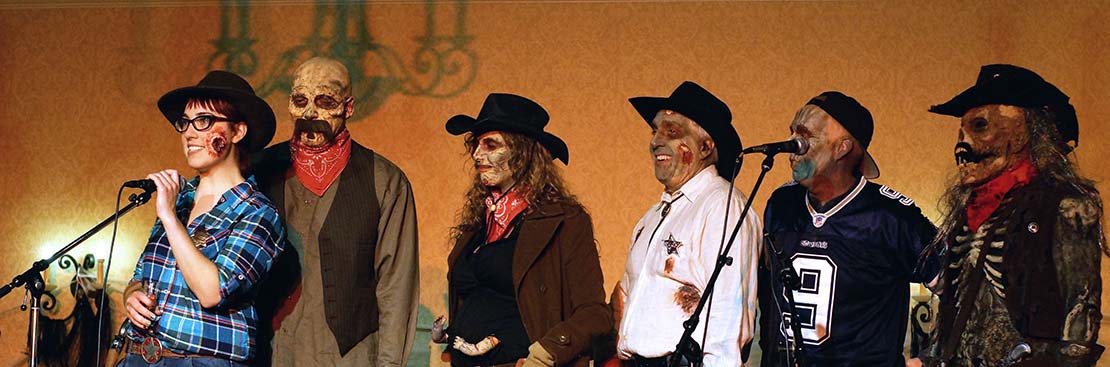
7:30PM — Halloween Party + Karaoke
12:00AM — Houdini Séance
8:00AM — Registration / Bookstore
8:45–9AM — Opening Remarks — George Hrab
9–9:30AM — Turning Metaphysics into Physics — Lawrence Krauss
Paper Sessions — Moderator: Raymond Edward Hall
9:45–10AM — War of the Weasels: An Update on Creationist Attacks on Genetic Algorithms — David E. Thomas
10:05–10:20AM — The Truth about Rh-Negative Blood Types — Ellen Tarr
10:25–10:40AM — Homeopathy on Trial: Allen v. Hyland’s, Inc. and a Failure of Evidentiary Gatekeeping — Robert Knaier
10:45–11AM — Predicting Pseudoscience: Concussions and the Developing Defense of American Football — Craig A. Foster
11:05–11:20AM — Evaluating Education for Critical Thinking: Can College Classes Reduce Belief in Nonsense? — Kathleen Dyer
11:25–11:45AM — Expert Elicitation vs. Chemtrails — Mick West
Since Genetic Algorithms (GAs) are a class of computer programs that use evolutionary principles to “evolve” answers to difficult problems in math, physics, engineering, and biology, they are a prime target of creationists of all varieties. This talk will trace the evolution of creationist attacks on GAs, from saying that they all need the final answers fed to them at every step (like Dawkins’s Weasel experiment), to claiming that “active information” is being secretly introduced into GAs, and finally to the preposterous definition of “Specified Complexity,” the claim that examples of evolving complexity don’t even count unless they meet the absurd criterion of being as uncommon as tossing a fair coin heads up 500 times in a row. The game is rigged from the very start: evolution can never win under the rules adopted by “intelligent design.”
David E. Thomas, a physicist and mathematician, is president of New Mexicans for Science and Reason and a fellow of the Committee for Skeptical Inquiry. He is currently a scientist/programmer at IRIS/PASSCAL in Socorro, New Mexico, and also teaches classes in physics, psychology, and critical thinking at New Mexico Tech.
Controversial and extraordinary claims associated with having an Rh-negative blood type are examined. Common claims include many that are interesting and relatively benign (e.g., associations with red hair color, high IQ, a sense of having a mission in life) as well as some that can have dangerous consequences, such as the belief that Rh-negative individuals are immune to HIV. Some of the mystique surrounding Rh-negative blood types is due to claims that science can’t explain how the Rh factor was “lost” in approximately 15 percent of the population. This has led to various nonhuman ancestors proposed as the source of Rh-negative blood types (e.g., reptilians, aliens, and Nephilim). In fact, science has already filled this knowledge gap, although the explanation may not be widely known in the scientific community. In addition, the common knowledge that the Rh factor is shared by Rhesus monkeys and Rh-positive individuals is incorrect—Rhesus monkeys are Rh negative.
Ellen Tarr received her PhD in molecular microbiology and immunology from the Johns Hopkins University Bloomberg School of Public Health. She is a comparative immunologist and teaches immunology and microbiology courses for students in healthcare professional programs at Midwestern University. She has previously written about Sasquatch DNA and participated in Project Core.
Americans spend over thirty billion dollars annually on “alternative” medicine, including “homeopathic” health-care products. The success of the homeopathy industry raises questions about whether its products actually work and whether, if they do not work, there are any legal consequences for those who make money by claiming that they do. This talk explores these questions. It discusses the nature of homeopathy; describes a lawsuit tried to a southern California jury in the summer of 2015, in which consumers alleged that Hyland’s, Inc., misrepresented the efficacy of its homeopathic products; explains the responsibility of federal courts to act as evidentiary “gatekeepers” with the power to preclude litigants from introducing unreliable evidence in support of purportedly scientific claims; and outlines how that gatekeeping function failed in the Hyland’s case, when “expert” witnesses were allowed to testify in support of the defendant’s products—resulting in a jury verdict in favor of Hyland’s. This talk then considers the harms that can flow from such a failure and offers thoughts on the importance of ensuring that litigants and courts focus their efforts on precluding pseudoscience from distorting the civil justice system.
Robert Knaier is an attorney with Fitzgerald Knaier LLP, a boutique litigation firm in San Diego, California. He is a graduate of the University of California, San Diego, and Cornell Law School; a member of the governing council of the American Bar Association’s Section of Science and Technology Law; and the vice chair of the ABA’s Scientific Evidence Committee. Knaier has expertise in the use and misuse of scientific evidence and in the admissibility of expert testimony. His publications have appeared in the Cornell Law Review, the California Western Law Review, the ABA’s Scientific Evidence Review, California Litigation, and elsewhere.
Scholars and skeptics characteristically describe and debunk pseudoscientific communities after such communities have already formed. This retrospective examination is sensible because pseudoscience is abundant but difficult to predict. Nevertheless, anticipating pseudoscience’s development would reinforce the value of skepticism and potentially inhibit new forms of pseudoscience. I predict that if American football is sufficiently threatened, a subset of passionate American football fans will develop a pseudoscientific community in response. The pseudoscientific defense of American football will generally involve dismissing the health consequences of American football participation and promoting American football’s unique but unsubstantiated contributions to character development and United States society.
Craig Foster is currently a professor in the Behavioral Sciences and Leadership department at the United States Air Force Academy. He received his PhD in social psychology from the University of North Carolina. He is currently the course director for his department’s statistics and research methods sequence. His research interests include scientific reasoning, pseudoscience, and concussion self-reporting.
Epistemically unwarranted beliefs are prevalent among college students as well as the general public. Classes in critical thinking are mandatory at many colleges, including in the California State University system. We documented the prevalence of several such beliefs and then used a pre- and post-test design to determine whether critical thinking classes work to reduce the prevalence of such beliefs. Results suggest that education that directly addresses pseudoscience does, in fact, reduce epistemically unwarranted beliefs but that education about research methods without the specific focus on pseudoscience does not.
Kathleen Dyer earned a PhD in Human Development and Family Studies from the University of Missouri-Columbia in 2000. She worked teaching evidence-based medicine in a medical residency program for four years before assuming a faculty position at the California State University, Fresno, where she is currently associate professor and department chair. Dyer primarily studies parenting practices pertaining to children’s sleep, as well as parent education. She has a secondary research interest in the development of curiosity and critical thinking in college students.
A surprising number of people think the white trails left by jet planes contain toxic chemicals secretly sprayed by the government for evil purposes. A vocal number of these people even harass real climate scientists, distracting from their work and even threatening them. In the first peer-reviewed study of its kind, we asked a large group of atmospheric scientists to evaluate the claimed evidence behind the “chemtrail” theory. Their conclusion that the trails are just normal contrails was widely reported in the media. But will it help hold back the tide?
Mick West is a former video game programmer who helped create the Tony Hawk’s Pro Skater series of games. He now runs the Metabunk website where he investigates and debunks everything from 9/11 conspiracy theories to photos of ghosts. Since learning to pilot a plane, he has taken a special interest in debunking the “chemtrails” conspiracy theory and has appeared on TV several times explaining why those white lines behind planes are actually just contrails.
Explore the curriculum content of current critical thinking courses offered at the college level including key concepts covered and a description of some of the desired learning outcomes students are expected to attain. Specifically this workshop will explore the examination and study of epistemically unwarranted beliefs (pseudoscience in particular) as a means to conveying critical thinking concepts. Participants will design curriculum content connecting a popular pseudoscience topic (of their choice) to specific critical thinking skills using teaching techniques supported by education research.
Target audience: Teachers and those who wish to understand best practices in teaching critical thinking skills at the college level.
Do you have what it takes to challenge those who say they have paranormal powers?
Since Houdini and before, skeptics have not only tested paranormal and other dubious claims, they’ve offered prizes for anyone who can prove such ability under controlled conditions. But how do we test these claims in a way that is fair both to the applicants and the examiners? And what sorts of questions are involved in the planning and execution of a well-run test?
The Independent Investigations Group (IIG), in conjunction with the Center for Inquiry, offers a $100,000 prize to anyone who can prove paranormal ability, and has been testing all-comers for over 16 years. In this workshop, IIG founder Jim Underdown will guide the audience through some of the most complex tests of paranormal ability ever undertaken. Attendees will learn the nuts and bolts of testing claimants, and with the help of other IIG members, participate in a mock test. Individuals will also be given some tools to conduct small-scale testing on their own. Anyone interested in becoming a stringer should attend this workshop.
An entertaining and compelling stage show of magic and mind-reading, including themes about science, skepticism, and the joys and wonders of true mystery. An unforgettable event - created and performed by Jamy Ian Swiss, as seen on "The Today Show," PBS "Nova," and "The Late, Late Show with Craig Feguson."
We all like to view ourselves as rational beings whose beliefs are rooted in reality. We like to think that we decide what to believe, whether relying upon logical analysis or intuitive sense. However, many of our most important beliefs are held on the basis of authority, social consensus and emotional comfort rather than rational analysis of evidence, and new beliefs often form automatically, bypassing any careful consideration.
Would you know if you were being conned?
Join New York Times bestselling author Maria Konnikova as she explores and explains the psychological principles that make swindling us so easy. From suspicious-looking emails to seductively-structured investment programs, tricksters and grifters use everything at their disposal to persuade us to part with our money. In a world in which the internet makes it easier than ever to access information and adopt new identities, even the savviest of individuals can be tricked. Could you be?
In this entertaining and insightful talk, Konnikova will tell the fascinating stories about some of the most seductive imposters in history, taking us into the world of the con to examine not only why we believe in confidence artists, but how our sense of truth can be manipulated by those around us.
Altercasting is putting the target of persuasion into the exact social role needed to gain maximum influence. Altercasting works as an influence tactic because social roles serve to structure interaction and then bring social pressures to act consistent with roles. Con criminals and other flimflammers play different roles (such as authority, friend, dependent, and hayseed) to place their targets in roles (agent, friend, helper, expert) that increase the likelihood of falling for the scam. Similarly, altercasting can be used to obtain pro-social goals such as blood donations, increased math performance, environmental protection, and reductions in social tensions. This talk will look at various common roles used in influence along with the experimental research that allows us to state what works and why. Our goal is to understand how we can use altercasting as an ethical means of persuasion along with how to reject unwanted altercasting.
Humankind’s first medicine was opium, a powerful painkiller that came with the price of addiction, overdose, and death. In the early 1800s, a French scientist purified the main component of opium: morphine. Because morphine was purer—and required lower doses to lessen pain—he believed that he had created the first non-addictive painkiller. Opium addicts became morphine addicts. In the late 1800s, a British scientist, again with the hope of separating pain relief from addiction, chemically modified morphine to make diacetylmorphine. The drug was mass-produced and sold over-the-counter by the pharmaceutical giant Bayer. Citing its heroic properties, Bayer called it Heroin. Morphine addicts became heroin addicts. The lesson went unlearned. In the mid-1950s, pharmaceutical-company chemists modified yet another component of opium that resulted in a painkiller that by 2012 was the most common cause of accidental deaths in America.
Functional medicine is not a legitimate scientific discipline; it is a marketing term designed to allow its practitioners to combine speculative ideas and untested methods with real medicine. It is an ill-defined new variant of so-called “integrative medicine.” Its claims are inconsistent, and its practitioners aren’t actually doing what they say they are doing.
Why are a group of critical thinker moms taking back the word "mom," a word that woo-mongers have hijacked? Why do fear and myths proliferate despite scientific consensus and evidence against them? Kavin Senapathy will discuss the Science Moms documentary and her book, The Fear Babe.
Investigating mysteries can be fun, as well as instructive. Sure, it’s an activity that requires a lot of patience, the desire and time to study and remain up to date, the willingness not to stop at the surface but always get to the bottom of things, the humbleness to seek advice and a lot of other big and small strategies in order to reach the end of the path that will lead to a final explanation, or at least to an educated guess in the impossibility of performing definitive testing. In his talk, Massimo Polidoro will give you 10 practical tools that will help you get started in the fine art of mystery detection. After that, you’ll only need a little curiosity for the subject and the desire to apply yourself and you will be ready to go.
To paraphrase Marx, the point of skepticism is not just to critique beliefs but to prevent unfounded beliefs from adversely affecting our world. Skeptics favor evidence-based reasoning and typically maintain that evidence-based reasoning should be the foundation for our public policy. But how to achieve this objective? I’ll discuss ways in which skeptics can influence public policy, using as an illustration CFI/CSI’s advocacy in the area of alternative medicine, especially homeopathy.
How evolution is taught and what is taught can lead the public to misunderstand both science and evolution. Dr. Eugenie Scott will explain why she does not believe in evolution, that fish did not evolve into amphibians, why evolution is like Monopoly, and conclude with "why Dobzhansky was right”.
The Teacher Institute for Evolutionary Science (TIES) stresses the importance of promoting teacher leadership in the United States. Here at TIES we feel that our fellow teachers are our own best resources. We are looking for high school and college biology educators who are interested in presenting our TIES workshops to middle school science teachers in their state. Our reasoning is that a middle school science teacher will typically cover many areas of science within his/her annual curriculum, including earth science, physical science, and life science. It is virtually impossible to become an expert in all of these areas, at least not initially. The purpose of TIES is to inform interested middle school science teachers about the most up-to-date concepts of natural selection, common ancestry, and diversity in order for them to confidently cover the topics in their classrooms and fulfill their curriculum requirements. In addition to providing science teachers with innovative professional development opportunities, TIES also has ready-to-use online resources for the classroom, including presentation slides, labs, guided reading assignments, and an exam.
As the population ages, concerns about Alzheimer’s disease and dementia have created a demand for anything that might stave off the course of mental decline. The idea that simple video games on your computer or smartphone could keep you mentally sharp is very appealing. Furthermore, brain training programs have a kind of simple plausibility. They sound scientific, and the analogy to physical exercise makes intuitive sense. But do they work?
We generate 2.5 quintillion bytes of information per day, or 250,000 pages for each of the 7.4 billion individuals on the planet -- every day. Much of it is junk. And in this, the 25th anniversary year of the first World Wide Webpage, the junk distribution network is free. The tsunami of misinformation abroad in the land threatens to drown both individual decision-making and the formation of rational public policy. I will explore the origin of the misinformation glut and illustrate the apps one must install in the pre-frontal cortex to survive in the Misinformation Age.
Wonder Woman could compel bad guys to tell the truth simply by grabbing them with her golden lasso. Telling truth from fiction on the internet isn’t so easy - but there are an array of tools and techniques that can help. This talk will walk you through some of the most useful ones, which you can put together to build your very own Lasso of Truth.
No, there really are no cockroaches in chocolate ice cream. But one of my radio listeners did jump to this conclusion after misinterpreting what had been said about a certain food colorant. Being on one end of a microphone and in front of television cameras for over thirty five years has afforded some fascinating insight into the public’s perception of science. It has also provided an opportunity to separate sense from nonsense in areas ranging from nutrition and medications to cosmetics and pesticides while emphasizing the importance of critical thinking.
I think that we should extend the bold claim made in 2004 by Craig Venter and Daniel Cohen to say "The 21st Century will be the century of biology: on Earth and beyond". I think that can't miss because there are three ways it could/will happen. We could discover it relatively nearby, we could communicate with it around a distant star, or we could take it off Earth ourselves. This talk looks at all the ways we are thinking and planning to do all that, and wonders what we haven't yet thought about.
For several decades, I have been manufacturing memories in unsuspecting minds. Sometimes this involves changing details of events that someone actually experienced. Other times it involves planting entire memories event events that never happened – “rich false memories.” People can be led to believe that they did things that would have been rather implausible. They can be led to falsely believe that they had experiences that would have been emotional or traumatic had they actually happened. False memories, like true ones, also have consequences for people, affecting later thoughts, intentions, and behaviors. Can we tell true memories from false ones? In several studies, I created false memories in the minds of people, and then compared them to true memories.. Once planted, the false memories look very much like true memories – in terms of behavioral characteristics, emotionality and neural signatures. If false memories can be so readily planted in the mind, do we need to think about “regulating” this mind technology? And what do these pseudomemories say about the nature of memory itself?
Skeptics are forever being puzzled by human stubbornness: “why won’t they believe me when I show them this excellent data?” Of course, we rarely apply this puzzle to ourselves: “why don’t I change my mind in spite of the (lousy) evidence that I’m wrong?” Our challenge is not only to understand why people believe what they do, but why all of us are slow to abandon those beliefs even, perhaps especially, when they prove foolish, misguided, dated, harmful, or plain wrong.
This year’s bash will feature you, the partygoer!
In addition to our annual costume contest, we’ll award a $100 prize for the best skeptical or science-based lyrics to a karaoke song sung on the karaoke stage. That’s right, you make up new lyrics to a song on the machine and belt ‘em out to the crowd for cash and prizes!
If you want your song lyrics projected so the audience can sing along with you, send them to Jim Underdown at jimu@cfiwest.org in a Word file before October 26th.
Hosted by Jim Underdown, Executive director of the Center for Inquiry-Los Angeles and lead singer of The Heathens.
As an example here is Jim Underdown's version of "Anything Goes" sung to the tune of "King of the Road."
Anything Goes
(to the tune of “King of the Road” by Roger
Miller)
Lyrics by James Underdown
Music by Roger Miller?
Schoolboards for sale or rent
Science books that make no sense
Intelligent Design’s ... sent us
Back to 1859
You know,
maybe the earth is flat
Shouldn’t we be teaching that?
I say…
All Ideas are equal
Anything goes
What kind of a buffoon
Thinks we landed on the moon?
Why can’t some people see
The need to know some alchemy?
Well let’s…
Not force on everyone
That the…
Earth is spinning ‘round the sun
You know…
All ideas are equal
Anything goes
Let’s say anything to anyone at any old time
We don’t need to try to make it reason or rhyme
All we gotta think about is giving a chance
To any explanation ‘bout the critters and plants
With talk of multiverses and black hole exotica, many people seem to think that physics at the forefront has become so speculative as to be indistinguishable from metaphysics. I will describe recent developments, involving a journey back to the beginning of time, that make it clear this is not the case, and make it clear that claiming we know the limits to knowledge involves a conceit that is unfounded. We won’t know what we can know until we try.
Excalibur Hotel & Resort
3850 S Las Vegas Blvd
Las Vegas, NV 89109
excalibur.com · (702) 597-7777
The hotel does not have a shuttle from the airport. Taxis are available 24 hours a day. Also, there are several different shuttle companies to choose from:
Bell Trans – 702-739-7990 (open 24 hours)
Earth Limos & Buses – 702-437-1900 (open 24 hours)
Showtime – 702-895-9976 (open 24 hours)
The McCarran Airport website also has additional information regarding transportation to and from the airport.
The Committee for Skeptical Inquiry is delighted to announce that we will incorporate a Sunday Morning Papers session at CSICon Las Vegas.
The Sunday Morning Papers session will recognize new voices and new ideas and showcase them in the spotlight of the CSICon stage. If you have had success in communicating scientific skepticism, teaching critical thinking, combating pseudoscience, or furthering the mission of CSI in some new and significant way, we want to hear from you!
CSICon Las Vegas needs your help! We are seeking a number of volunteers to help support the event, whether with speaker support, registration, event management, PR, merchandising, outreach, tabling, or other opportunities.
Call for Papers
The Committee for Skeptical Inquiry is delighted to announce that we will incorporate a Sunday Morning Papers session at CSICon Las Vegas.
The Sunday Morning Papers session will recognize new voices and new ideas and showcase them in the spotlight of the CSICon stage. If you have had success in communicating scientific skepticism, teaching critical thinking, combating pseudoscience, or furthering the mission of CSI in some new and significant way, we want to hear from you!
Anyone may submit a request to present a paper. If your proposal is accepted you will be allotted 10 to 15 minutes for your presentation and an additional 5 minutes for questions and comments from the audience. Invitations to present will be given to approximately six proposals. If your proposal is selected for further consideration, a written article and draft of your presentation slides will be required for final consideration. Please see the process of selection schedule below for further details.
Submission Instructions
Proposals should be submitted to papers@csiconference.org.
In your message, include the following: Name of Speaker, Position/Affiliation, Address, Phone Number, Email, Website
Please attach a maximum two-page document with the following information:
Presentation Title
Abstract: Provide a concise summary of your proposed presentation in at least 100 words. Outlines may be included. A description of how the topic is relevant to the CSI mission is mandatory.
AV requirements: A digital projector will be made available for presentations that utilize PowerPoint and other computer based presentation applications. Please list any other equipment or supplies you might require.
Publications/References: Please list any relevant references and/or any of your own publications related to this presentation. Include a link to your web page if appropriate.
Relevant topics for papers include (but are not limited to):
Analysis of questionable claims, rational examination of claimed paranormal phenomena, ideas in critical thinking education, psychology of belief, or any of the usual topics of interest explored in Skeptical Inquirer magazine or that support the mission of the Committee for Skeptical Inquiry.
Selection process schedule
If your proposal makes it through the initial selection, we will request from you a written paper and a draft of your PowerPoint slides (if any). The submitted paper should be at the level of a magazine article (like that of Skeptical Inquirer magazine) or a journal article appropriate for your professional discipline.
Note: All invited Sunday Paper presenters are responsible to pay for their own attendance including registration. CSI greatly appreciates your volunteer participation, but unfortunately cannot fund any part of your travel, lodging, or conference registration.
Volunteer Information
CSICon Las Vegas needs your help! We are seeking a number of volunteers to help support the event, whether with speaker support, registration, event management, PR, merchandising, outreach, tabling, or other opportunities. By volunteering, you help keep the price of CSICon down for everyone.
As a small nonprofit organization, CSI greatly appreciates the generous support of its many volunteers. Unfortunately, we cannot fund any part of your travel, lodging, or conference registration. Volunteers will receive special “CSICon Las Vegas Volunteer” t-shirts.
Thank you for helping make CSICon Las Vegas a success, and for supporting CSI’s important work!
Sign-up Instructions
Please email volunteering@csiconference.org.
In your message, include the following: First Name, Last Name, Organization, Email, Phone Number
Also, please let us know your availability around CSICon, your arrival and departure dates/times, and how many hours you are willing to volunteer. Feel free to mention if there is anything else you would like us to know or if there is something you are particularly good at and would like to provide assistance with for the conference. Comments and questions are welcome.
The Center for Inquiry values full participation at all of its events, including participation from individuals with disabilities. Requests for reasonable accommodation may be made by contacting Barry Karr at (716) 636-4869 ext. 217 or bkarr@centerforinquiry.net.